



ANGEL ASSET MANAGEMENT
Why Buy Separate Flood Insurance? NFIP and Private Coverage

Flood insurance is usually purchased separately from homeowners, renters or commercial property insurance because most standard property policies do not cover direct flood damage. A home outside a mapped high-risk area can still flood.
1. What Counts as a Flood?
Flood policies use a specific definition, generally involving surface water inundating a qualifying area of normally dry land. A burst indoor pipe, seepage affecting only one basement or a maintenance problem may not meet that definition.
2. NFIP and Private Insurance
The National Flood Insurance Program (NFIP) is managed by FEMA and sold through participating insurers or NFIP Direct. Private insurers issue private flood policies. Limits, waiting periods, valuation, basement coverage and additional expenses can differ.
3. Building and Contents
Building coverage protects eligible structures and fixed equipment; contents coverage protects eligible belongings. Under the NFIP they are generally purchased separately and have separate deductibles.
4. Common NFIP Residential Limits
Residential NFIP limits are generally up to $250,000 for a building and $100,000 for contents. Commercial limits differ. For higher limits compare private or excess coverage, subject to current eligibility and terms.
5. Common Exclusions or Restrictions
Temporary housing, additional living expenses, business interruption, vehicles, landscaping, fences, decks, pools, cash and many basement contents are generally excluded from standard NFIP coverage. Private policies have their own exclusions.
6. Replacement Cost and Actual Cash Value
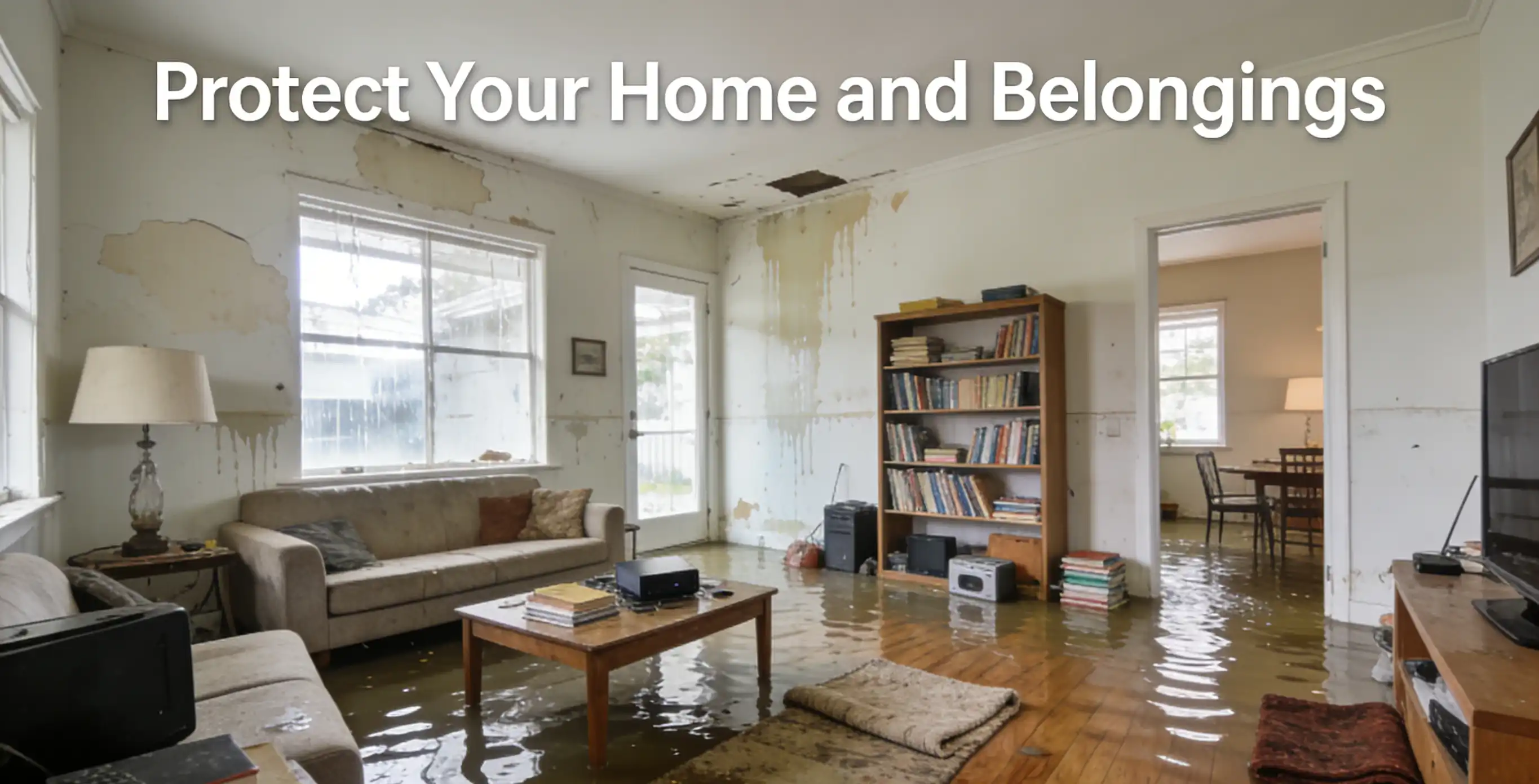
Settlement depends on the policy, property use and eligibility. Actual cash value deducts depreciation. Do not assume all property will be reimbursed at new replacement prices.
7. Why Plan Before a Storm?
New NFIP policies generally have a 30-day waiting period, with exceptions for certain mortgage transactions, mapping changes or qualifying flooding after a federal-land wildfire. Private policy waiting periods differ.
8. Flood Zones and Lender Requirements
Properties in certain high-risk areas with federally regulated loans may be required to carry flood insurance. Even when it is not required, consider elevation, drainage, past losses and your ability to rebuild.
9. Limits and Deductibles
Estimate building repair and contents replacement separately and review limits on basements, equipment and valuables. A higher deductible may lower premiums but increases the amount you pay after a loss.
10. After a Flood
Stay safe and report promptly. Photograph water lines and damage, document models and serial numbers, separate damaged and undamaged items, preserve evidence and keep communications with the insurer and contractors.
This is general education, not legal or individual insurance advice. Flood definitions, limits, waiting periods and payment depend on the policy, applicable NFIP rules and law in effect when purchased.
PUT YOUR KNOWLEDGE INTO PRACTICE
Your next step
Discuss your next step. The consultation form will identify this article; you can edit or remove that context.
Discuss my coverage needs →