
Workers’ Compensation Insurance: Protecting Your Business and Employees


Workers’ compensation insurance is a critical part of running a responsible business. Workplace injuries can happen in any industry, and when they do, the financial and legal consequences can be significant. This coverage helps protect both employees and employers by providing structured support for work-related injuries and illnesses.
1. What is Workers’ Compensation Insurance?
Workers’ compensation insurance provides benefits to employees who are injured or become ill due to job-related activities.
In exchange, employees generally give up the right to sue the employer for negligence, creating a balanced system of protection.
A foundation of workplace protection
This coverage ensures employees receive timely support while helping businesses manage legal and financial risk.
2. Who can benefit from Workers’ Compensation Insurance?
This coverage is essential for:
- Businesses with employees
- Contractors and construction companies
- Service-based businesses
- Employers in both high-risk and low-risk industries
In most states, carrying workers’ compensation insurance is required by law.
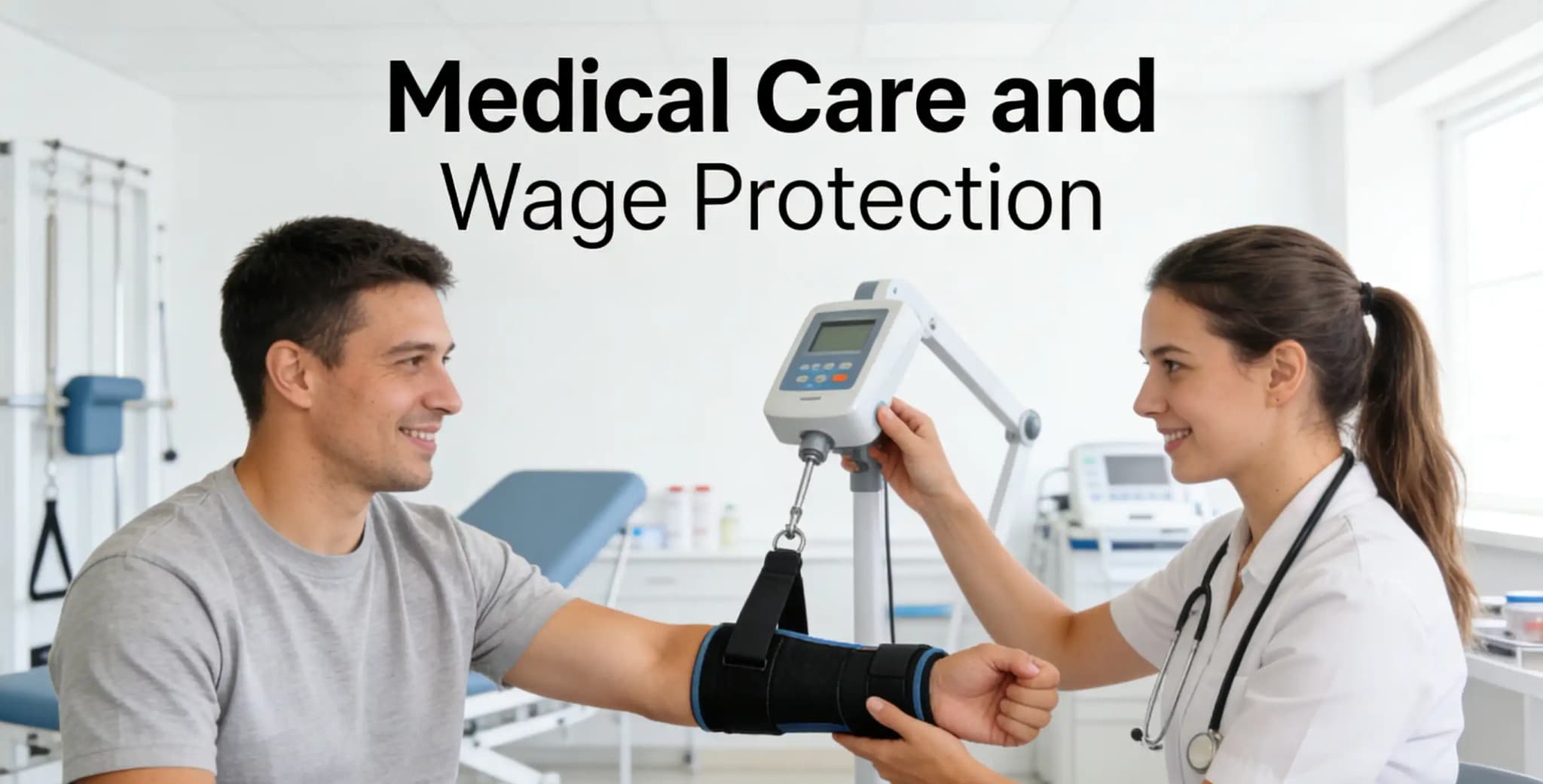
3. What does Workers’ Compensation cover?
Medical expenses
Covers treatment related to workplace injuries, including:
- Doctor visits
- Hospital care
- Rehabilitation and therapy
Lost wages
Provides partial income replacement when an employee is unable to work.
Disability benefits
Supports employees experiencing temporary or permanent disability.
Death benefits
Provides financial support to dependents in the event of a fatal workplace incident.
4. How Workers’ Compensation works
The process typically includes:
- Reporting the injury to the employer
- Filing a claim with the insurance carrier
- Receiving medical care and evaluation
- Providing benefits based on eligibility
To explore available options and personalized planning, please click here.
5. Choosing the right strategy
When selecting a policy, consider:
-
Number of employees
-
Type of work and risk level
-
Payroll and job classifications
-
State-specific compliance requirements
Balancing protection and cost
A well-structured policy helps ensure compliance while managing long-term insurance costs.
6. Important things to know
Coverage is often required by law
Failing to carry workers’ compensation insurance may result in penalties, fines, or legal consequences.
Premiums depend on risk
Higher-risk industries typically have higher premiums due to increased exposure to workplace injuries.
Workplace safety matters
Implementing safety programs can reduce claims and improve overall cost efficiency.
7. Why it matters
Workers’ compensation insurance provides:
- Financial protection for employees
- Legal protection for employers
- Stability for your business operations
It is a key part of maintaining a safe and compliant workplace.
Protecting your team today helps secure your business tomorrow.
Click here for consultation.
Learn more
Explore related topics: