
Long-Term Care Riders in Life Insurance: Protection Beyond the Policy


Long-Term Care (LTC) riders in life insurance provide a practical and flexible way to prepare for future healthcare needs while maintaining financial protection for your family. As medical and care costs continue to increase, many individuals are looking for solutions that combine coverage and value. An LTC rider allows your life insurance policy to serve a dual purpose—supporting both care expenses and legacy planning.
1. What is a Long-Term Care Rider?
A Long-Term Care rider is an optional feature that can be added to certain life insurance policies, allowing policyholders to access a portion of their death benefit for qualified long-term care expenses.
This type of rider provides multiple outcomes:
- If long-term care is needed: You can accelerate part of the death benefit to cover care costs
- If care is not needed: The full death benefit is paid to beneficiaries
- In some cases: Flexible payout options and benefit structures are available
A dual-purpose protection strategy
LTC riders transform life insurance into a living benefit tool, providing support during your lifetime while preserving financial protection for your loved ones.
2. Who can benefit from an LTC rider?
LTC riders are designed for individuals who:
- Are already considering life insurance coverage
- Want additional protection for future care needs
- Prefer a bundled solution rather than separate policies
- Are concerned about rising healthcare costs
- Want to protect both themselves and their family financially
Eligibility typically depends on age, health condition, and the type of life insurance policy.
3. Key features of LTC rider coverage
Access to living benefits
Policyholders can use a portion of the death benefit to help pay for long-term care expenses when needed.
Flexible usage of funds
Benefits can typically be used for:
- Home healthcare services
- Assisted living facilities
- Nursing home care
Cost-effective solution
Adding an LTC rider is often more affordable than purchasing standalone long-term care insurance.
Simplified underwriting
LTC riders are usually easier to qualify for compared to traditional LTC policies.
4. How LTC riders work
When a policyholder qualifies for long-term care (usually based on the inability to perform two out of six Activities of Daily Living or cognitive impairment), the rider allows access to funds.
Benefits are generally paid monthly, often as a percentage of the death benefit.
If care is used, the remaining death benefit is reduced accordingly. If not, the full benefit remains intact for beneficiaries.
To explore available options and personalized planning, please click here.
5. Choosing the right strategy
LTC riders can vary depending on the life insurance policy and carrier, including:
-
Acceleration-only riders
-
Extension of benefits riders
-
Different payout percentages and durations
Aligning with your financial goals
Choosing the right rider depends on your coverage needs, budget, and long-term financial planning objectives.
6. Why LTC rider planning matters
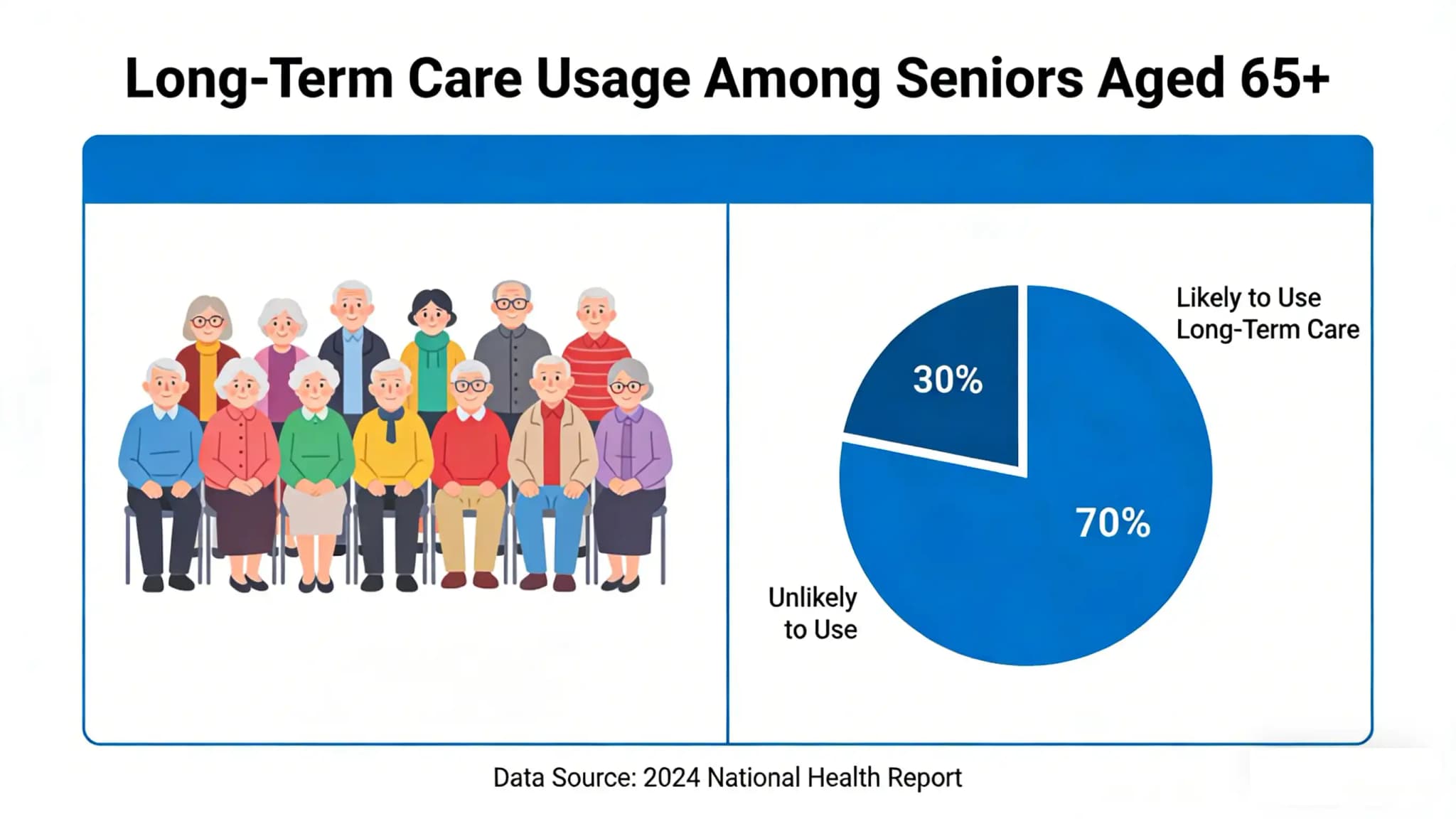
Long-term care expenses can place a significant burden on personal savings and family resources. An LTC rider provides a proactive way to address these risks while keeping your financial strategy simple and efficient.
By integrating care coverage into life insurance, individuals can enhance protection without adding multiple policies.
7. Who should consider an LTC rider?
LTC riders are especially suitable for individuals who:
- Are between ages 40–70
- Are planning to purchase life insurance
- Want additional protection without separate LTC policies
- Seek cost-effective and flexible solutions
Combining protection and flexibility creates greater financial confidence for the future.
Click here to explore LTC rider solutions.
Learn more
Explore related topics: